


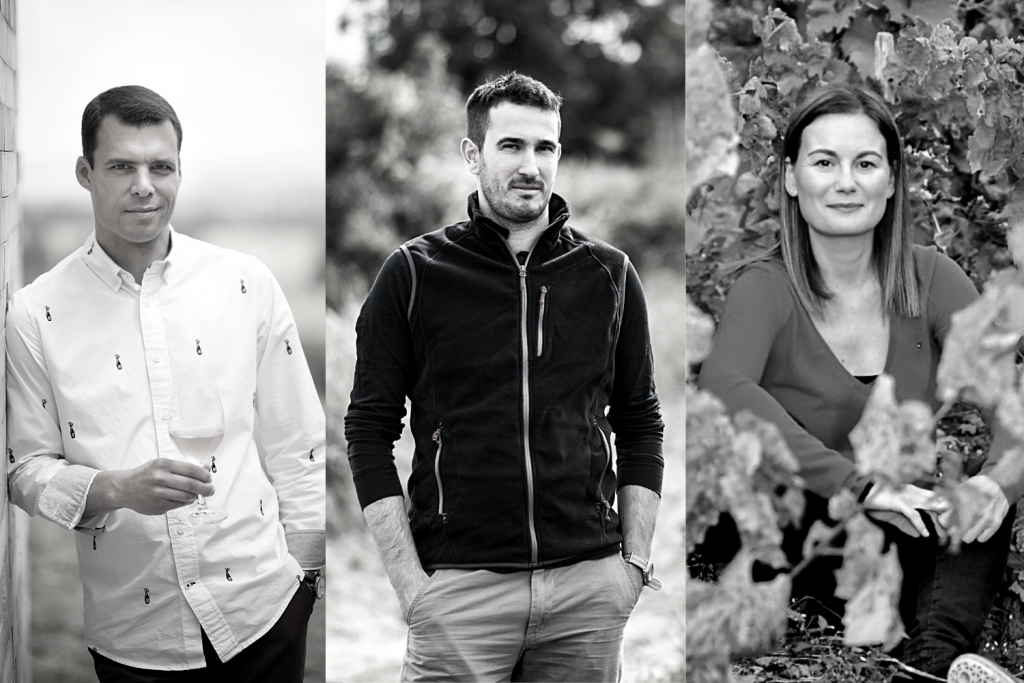
The first ever Hungarian Wine Summit, organized by the Agricultural Marketing Centre, is soon to take place. The main objective of this a large-scale event series is to further strengthen the position of Hungarian wines among international wine professionals through a series of study tours, walk-around tastings and masterclasses. We asked representatives of some participating wineries why they thought improving competitiveness in export markets was important.
Péter Vida Jr., Marketing and Commercial Manager of Vida Péter Szekszárd:
Why do you consider the international wine market important for the future of Hungarian wine?
We are certainly not going to be the country that supplies the world with cheap table wines, our conditions do not enable us to fulfill such a role. Nor do the conditions of Europe, generally speaking. However, with our local varieties, we can offer the world something that is of outstanding quality, that can be an exciting addition to the assortment of any wine merchant or restaurant from New York to Tokyo.
The fact that Hungarian wines are competing on the world market is both a quantitative boost for the sector and requires continuous improvement in quality, which will raise the overall value of Hungarian wines.
How can the Hungarian Wine Summit contribute to the competitiveness of Hungarian wines?
Quite simply it should be an essential element of the promotion of Hungarian wines to organise regular study tours for foreign merchants and opinion leaders. A personal visit is an experience that will last forever. A tour of the vineyards or a walk-around tasting in the wine region gives a comprehensive picture that cannot be conveyed in any other way.
I am really pleased with the Hungarian Wine Summit initiative. However, I think it will make proper sense only if events like this will be regularly organized in the future. Then it can contribute to helping the sector to achieve wider international recognition. The Budapest event offers a comprehensive overview of our wine regions in a relatively short time frame, so the two events complement each other really well.
Csilla Sebestyén, Export Manager of Sebestyén Winery:
Why do you think the international wine market is important for the future of Hungarian wines?
We need to showcase high quality, unique wines. These wines can help us to make Hungary an integral part of the international wine market. This has become vital today, because as most of us are experiencing, our domestic possibilities are limited.
Why do you think it’s important for international experts to come and visit our country?
I believe that there is no better way of offering an authentic introduction than to have international experts actually visiting the wine regions. Their presence provides the right opportunity to show what we are good at, what makes us special and why our wines are worth their while. It is also an opportunity to develop a personal connection and a strong emotional attachment to the wine region, its wines and the winemakers themselves.
Tamás Illés, Marketing and Commercial Manager of Pannonhalma Archabbey:
Why do you consider the international wine market important for the future of Hungarian wines?
Before the world wars Hungary was considered to be a major player in the wine world and the wine markets in the eyes of the general public in Hungary, in Europe and even beyond. It is an important task to live up to this responsibility once again, not only because of this historical heritage, but also because of its economic and cultural aspects. The mismatch between domestic wine production and consumption means that it is not optional, but obligatory for wineries capable of doing so to do their best to address the issue of wine exports, and in today’s increasingly competitive international wine market, it is actually a major challenge even to survive, not to mention, to strengthen one’s market position.
Why is it important for international experts to visit our country in person?
It’s been years now that the pandemic, with its constant restrictions, has made it impossible to have a properly functioning professional wine community as it is heavily dependant on personal business contacts and individual or shared tasting experiences, the losses of which can hardly be compensated by virtual meetings and online tastings – so we must seize every reasonable opportunity to put the real experience back in focus. The best way to experience wine production and wine tourism in our country is by visiting the actual sites where the wines are born, the production areas and the wineries, and for a foreign expert such experiences add valuable theoretical knowledge, while for us, domestic wine producers, there is no better way to receive up-to-date information, to learn about potential opportunities on the international wine market and to gain access to the most authentic overall picture of the international wine market than the one offered by importers, distributors, press representatives, opinion leaders and other actors in these target markets.